Waiting for Your Nursing Placement? Here's a 30-Day Plan to Land One and Earn Your First Income While You Wait
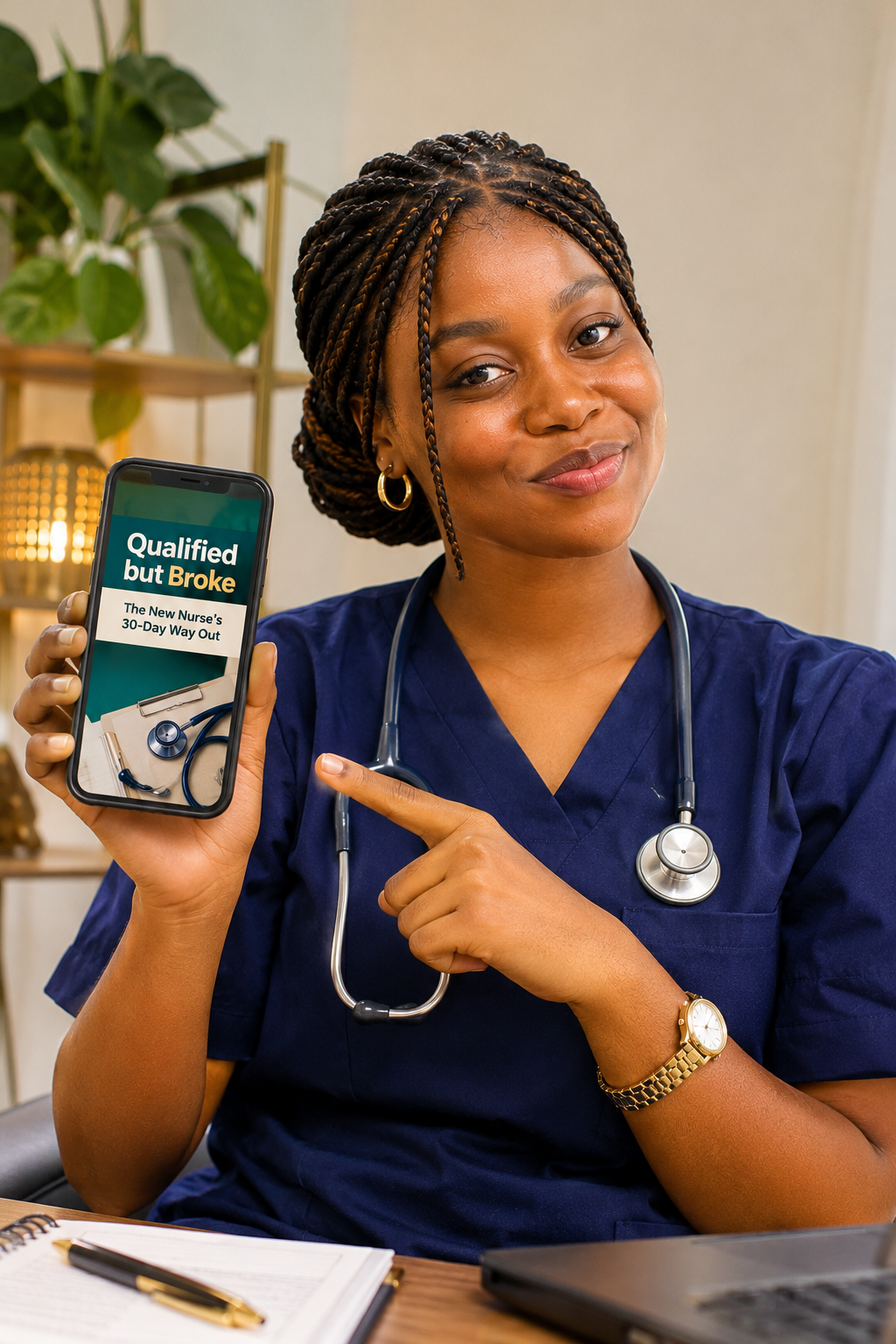
You wake up later than you used to. There's no ward round to rush to. No lecture. No posting yet.
You check your phone first. Another classmate has posted a picture in uniform, tagged at a hospital you also applied to.
How did she get in? Who did she know?
You remember how much your family spent on that degree. The school fees. The hostel. The textbooks. The clinical posting transport. Nobody complained, but you saw your mum's face when the fees came in.
And now you're home. Waiting for an internship that, when it finally comes, will pay less than ₦150,000.
When an aunty asks, "So what are you doing now?" you smile, say "I'm waiting for posting," and change the subject as fast as you can.
You still ask your parents for transport money. Every time, it feels heavier.
At night, you type the same things into Google: "how to get a nursing job in Nigeria." "how to make money as a new nurse."
The answers are either generic, or they need connections you don't have, or they were clearly written for someone who isn't a nurse.
Maybe there's a secret everyone else knows and I don't.
There isn't a secret. But there is a plan. And it's not the one most of us were told.
Here's what changed it for me.
My Story: Qualified, Grateful… and Stuck
My name is Abigail. I'm a newly qualified Nigerian nurse. I'm not a guru, and I'm not writing to you from five years in the future. I'm writing from the same stage you're in.
I remember the day I finished. I thought the hard part was over. Years of clinicals, night reading, care plans and exams, and finally, I was qualified.
Then the quiet started.
Nobody tells you about the gap between "qualified" and "working." You leave school with a licence and a lot of skill, and then you sit at home and wait. For a posting. For a reply. For "something to come up."
The cost wasn't only money, though money was a big part of it. I had no income of my own. Every small need, data, transport, toiletries, meant asking. And every time I asked, I felt the weight of everything my family had already spent on me.
The bigger cost was confidence. I started avoiding people. Family gatherings became stressful. I'd scroll past classmates' updates and feel like I was the only one left behind.
I trained for this. Why does it feel like I'm not good enough?
What I tried first (and why it didn't work)
I sent my CV everywhere. Hospitals, private clinics, anywhere I could find an email for. Most never replied. Looking back, I know why: I had no contact person, no record of who I'd sent what to, and no follow-up plan. I sent a CV and hoped. Hope isn't a system.
I asked seniors for help. People were kind, but the answers were vague. "Let me see what I can do." "I'll let you know." Nothing concrete, and I didn't know how to follow up without sounding desperate.
I watched side-hustle videos. So many of them. But they were made for everyone, not for a nurse. Nobody explained what a new nurse can actually offer, inside her licence and scope, with no capital. So I watched, felt inspired for an hour, and didn't start.
I tried a small online hustle. It stalled within weeks, because I had no clear steps and no idea how to find my first customer.
And mostly, I waited. That was the most expensive thing I did. Waiting cost me months I can't get back.
What actually changed
The turning point wasn't a person. It was a shift in how I saw the problem.
From my clinical placements I already knew how hospitals actually work: who reads messages, who makes recommendations, how busy matrons and unit heads are, and why a polite, specific, well-timed message gets read when a cold CV doesn't. I'd just never applied that knowledge to my own job search.
So I stopped treating placement like luck and started treating it like a system. And I realised income was a system too.
Three things clicked for me:
1. The problem wasn't my ability. I wasn't missing a secret. I was missing a process.
2. Waiting is the worst strategy. Every week I waited was a week nobody knew I existed.
3. My degree is a set of sellable skills. I can explain pharmacology to a struggling student. I can write clear, accurate health content. I can organise patient information and schedules. Those are real skills people pay for, and none of them break the rules of my licence.
So I built myself a plan. Two tracks, running side by side:
Track A, the placement: instead of "send CVs everywhere," I made a list of 20 specific targets. I wrote short messages that respect a busy person's time. I scheduled follow-ups and logged every reply, or every silence.
Track B, the first income: I picked one route that fit my skills and my scope, not five. Tutoring nursing students, health content writing, selling study notes, or virtual assistant work for a clinic. Then I made my first offer, a real message to a real person, instead of waiting until I felt "ready."
The first day alone felt different. I made a list of 10 hospitals and clinics and sent three short messages. That's it. But for the first time in months, I'd done something instead of waiting for something.
That feeling, of moving instead of waiting, is what this whole plan is built on.
What changed? I stopped dreading the question "So what are you doing now?" because I finally had an answer: "I'm following up with my target facilities, and I'm tutoring / writing / working on my first offer." I stopped feeling like I was just sitting. I started feeling like a professional in transition, which is exactly what we are.
I wasn't behind. I just didn't have a map.
Why I turned it into a guide
While I was building this, I kept thinking of my classmates. The ones who'd gone quiet in the group chat. The ones searching the same things at night.
And I noticed something: there was no guide built for a new nurse's reality. Not for a doctor, not for a tech bro, not for "anyone who wants to make money online." For us. Newly qualified, living at home, waiting on a posting, with a licence to respect and no capital to start with.
So I wrote down everything, the tracker I use, the exact messages, the checklist for choosing an income route, and a day-by-day plan, and packaged it so you don't have to spend months figuring it out like I did.
I'll be honest about what it is and isn't. It's not a promise that a hospital will call you tomorrow. Nobody can honestly promise that. It's a clear, daily plan that gets you moving on both fronts, so you stop waiting and start building.
Introducing: Qualified but Broke
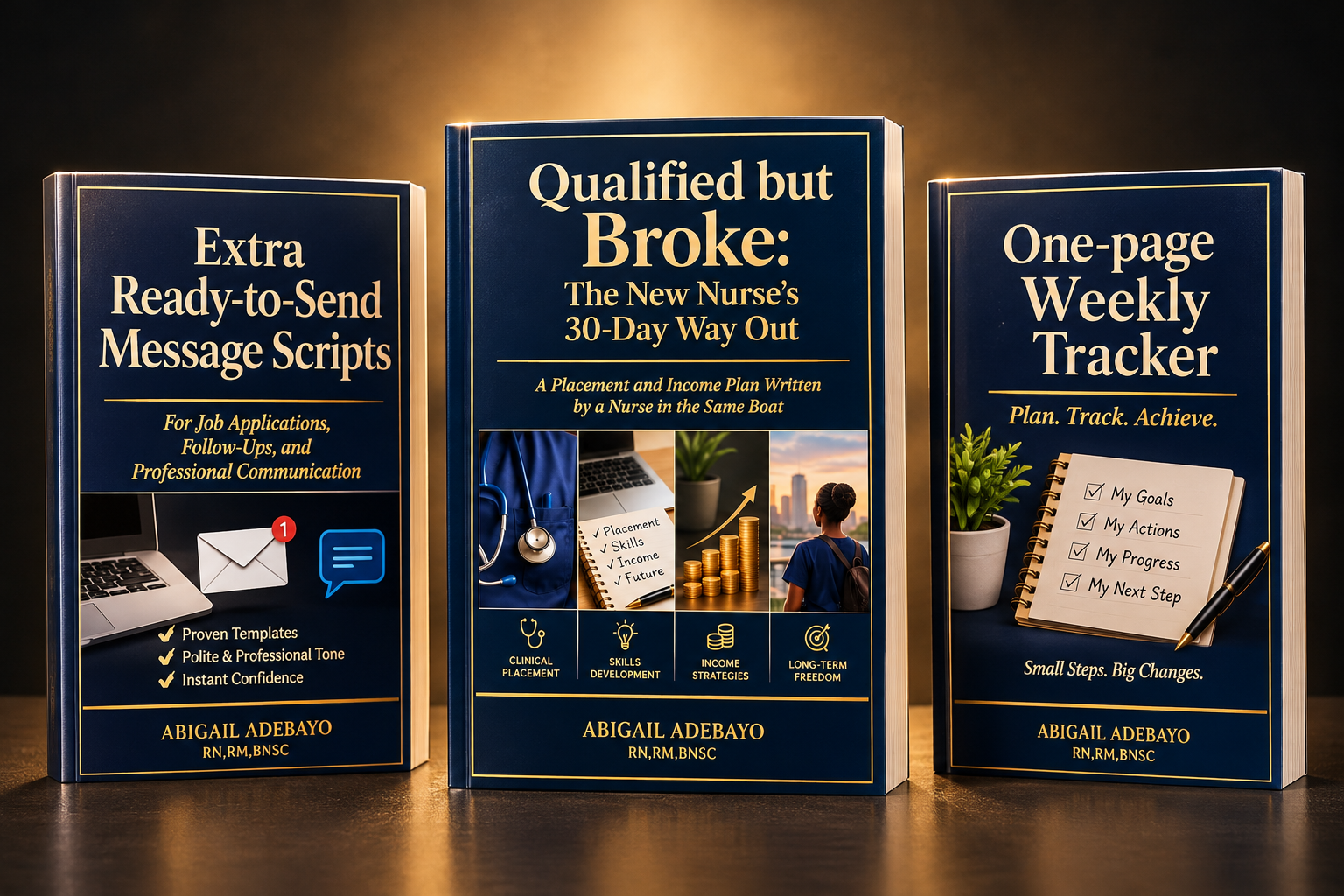
I called it "Qualified but Broke: The New Nurse's 30-Day Way Out", because that's exactly how I felt, and I know I'm not the only one.
A Placement and Income Plan Written by a Nurse in the Same Boat.
It follows three simple phases:
Phase 1: UNDERSTAND (Days 1–5). Reset how you see your situation. Placement and income are systems. Waiting is the worst strategy. Your degree is a set of sellable skills.
Phase 2: ACT (Days 6–24). Run Track A (your 20-target placement list, messages that get read, scheduled follow-ups) and Track B (choose one income route within your licence and make your first offer).
Phase 3: SUSTAIN (Days 25–30+). Keep both tracks running, grow your income alongside your internship so one pay cheque is never your only lifeline, and track your progress.
Your first visible win comes in the first 24 hours: a list of 10 target hospitals or clinics, and three short messages sent. By the end of Phase 2, you'll have made your first income offer.
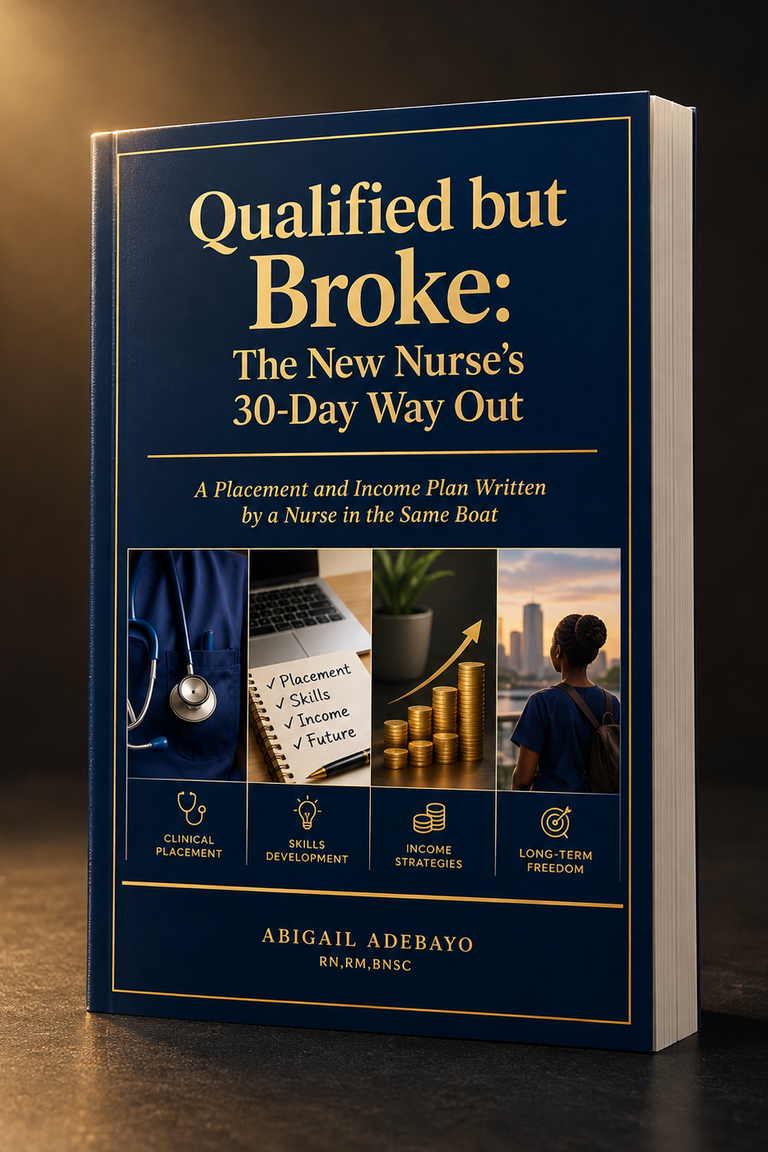
Inside this guide, you'll find:
- The 20-Target Placement Tracker. Log where you applied, when to follow up and what happened, so no opportunity slips through the cracks. (Pg. 3)
- Message Scripts for WhatsApp and Email. Copy-and-adapt scripts for asking seniors for help, contacting facilities, and following up politely without sounding desperate. (Pg. 8)
- The First-Income Chooser. A short checklist to pick the one income route that fits your skills, your time and your licence: tutoring, health writing, study notes or clinic VA work. (Pg. 12)
- The 30-Day Daily Checklist. One clear action for every single day. No guessing what to do next. (Pg. 16)
- The "What to Say When People Ask" Cheat Sheet. Calm, confident answers for the awkward family and church questions. (Pg. 23)
What Readers Are Saying
Ahmed Bolaji
Lagos, Nigeria
“I honestly didn’t know where to start with my placement search. I had been sending CVs randomly without knowing what to do next. The placement tracker and message templates gave me a more organised approach. I particularly liked having a clear follow-up plan instead of just waiting for replies.”
Caroline Douglas
Rivers, Nigeria
“What I love most about this guide is that it doesn’t just motivate you; it tells you what to actually do. The daily checklist makes everything easier to follow, and the message scripts save me the stress of figuring out what to say when contacting hospitals and senior nurses.”
Esther Folashade
Edo, Nigeria
“I would recommend this to any newly qualified nurse who is currently at home waiting for internship placement. It helps you organise your thoughts, identify opportunities and become more intentional about what you’re doing with your time.”
What It's Worth, and What You Pay
This guide is built from real research and my own lived experience as a new nurse going through this exact stage. It's the map I wish someone had handed me the day I finished school.
Think about what it replaces: months of sending CVs into silence, guessing what to say to seniors, and starting hustles that weren't made for nurses. If the plan helps you land your placement sooner, or earn even one tutoring or writing payment, it has more than paid for itself.
And it costs less than a few days of transport money.
Regular price
₦8,000
₦2,999
One-time payment. Instant PDF download.
The first 30 people get the guide at ₦2,999. After that, the price returns to ₦8,000.
Plus, Two Bonuses to Keep You Going
I added two extras because I needed them myself once the first 30 days were done:
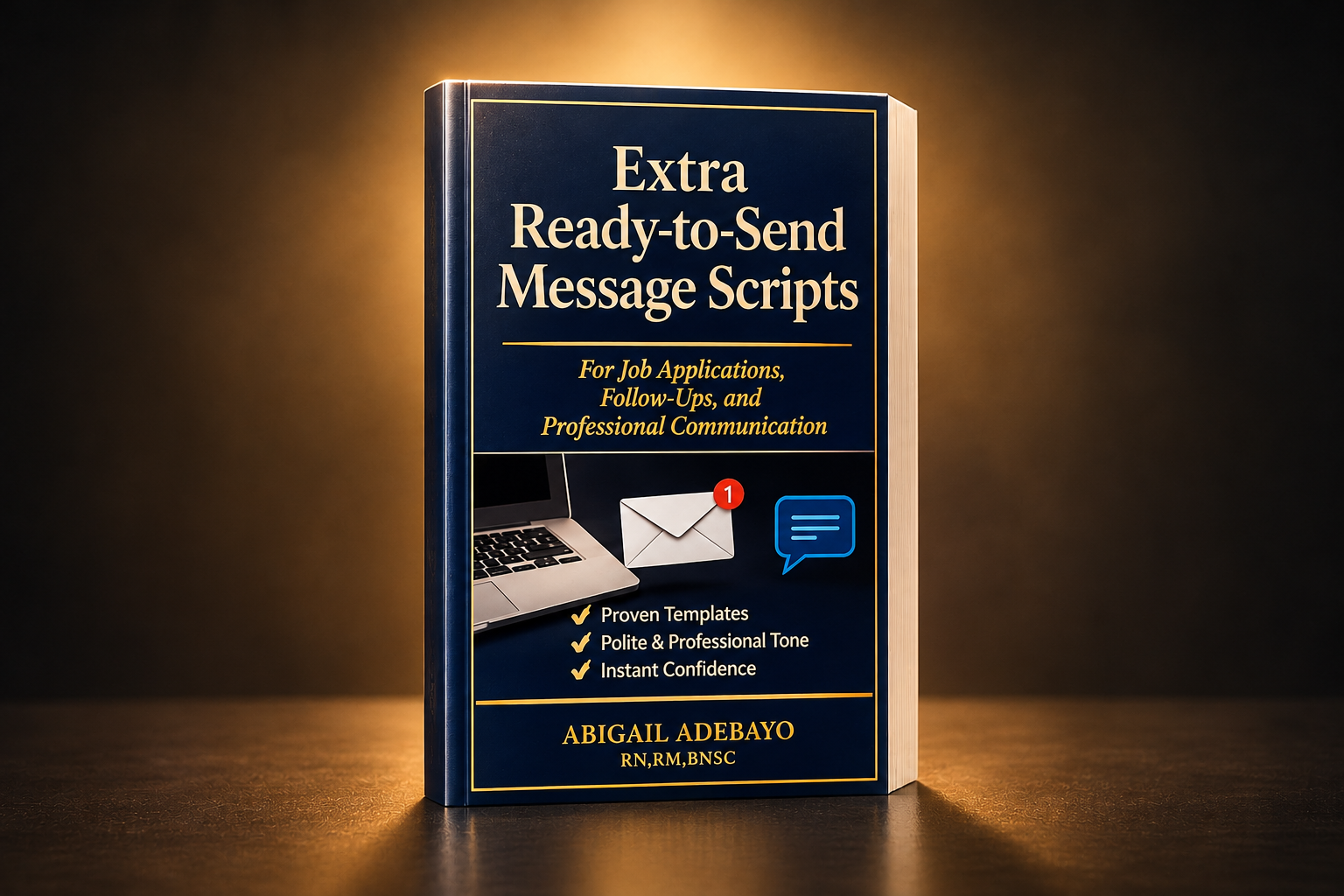
Bonus 1: Extra Ready-to-Send Message Scripts
More scripts for trickier situations: following up after silence, asking for referrals, and reconnecting with seniors you haven't spoken to in a while.
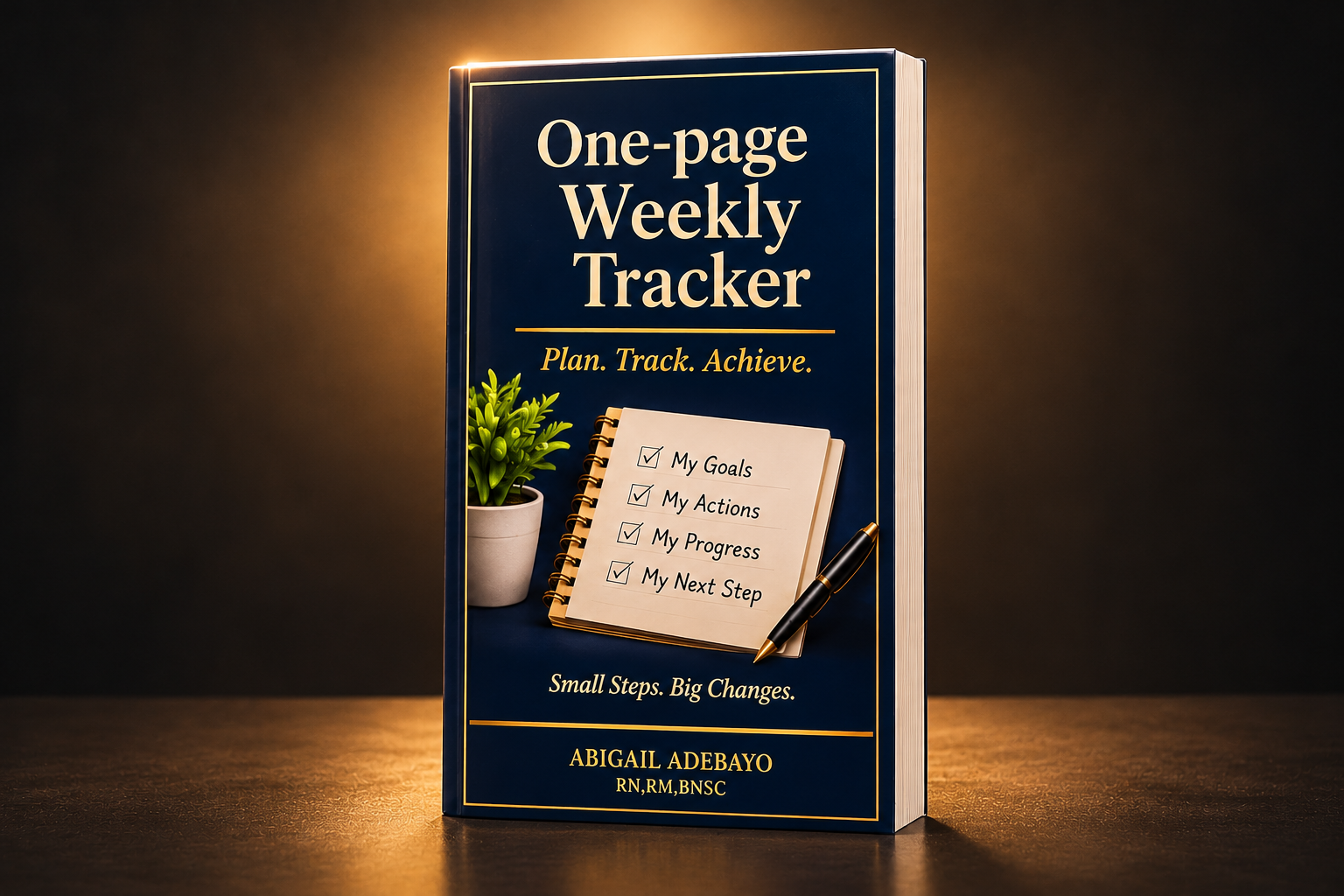
Bonus 2: One-Page Weekly Tracker
A simple weekly page to keep both tracks, placement and income, running after the 30 days end.
Action
Guarantee
My Promise to You
I want you to take action, not just read. So here's my guarantee:
Follow Days 1–5 as written. If you haven't completed your first target list and sent your first messages, get a full refund.
No drama. Just message me and I'll refund you. If the plan doesn't get you moving, you shouldn't pay for it.
A Note Before You Go
You've already done the hard part. You finished nursing school. You passed. You're qualified.
What's missing isn't talent or a secret connection. It's a plan, and someone who understands this stage telling you, plainly, what to do each day.
If you start today, by tomorrow you can have 10 target facilities on paper and three messages sent. In a few weeks, you can have your first income offer out there. And the next time someone asks "So what are you doing now?", you'll have a real answer, and you'll say it with your head up.
I'd love for you to walk this path with me.
With warmth,
Abigail
A nurse in the same boat